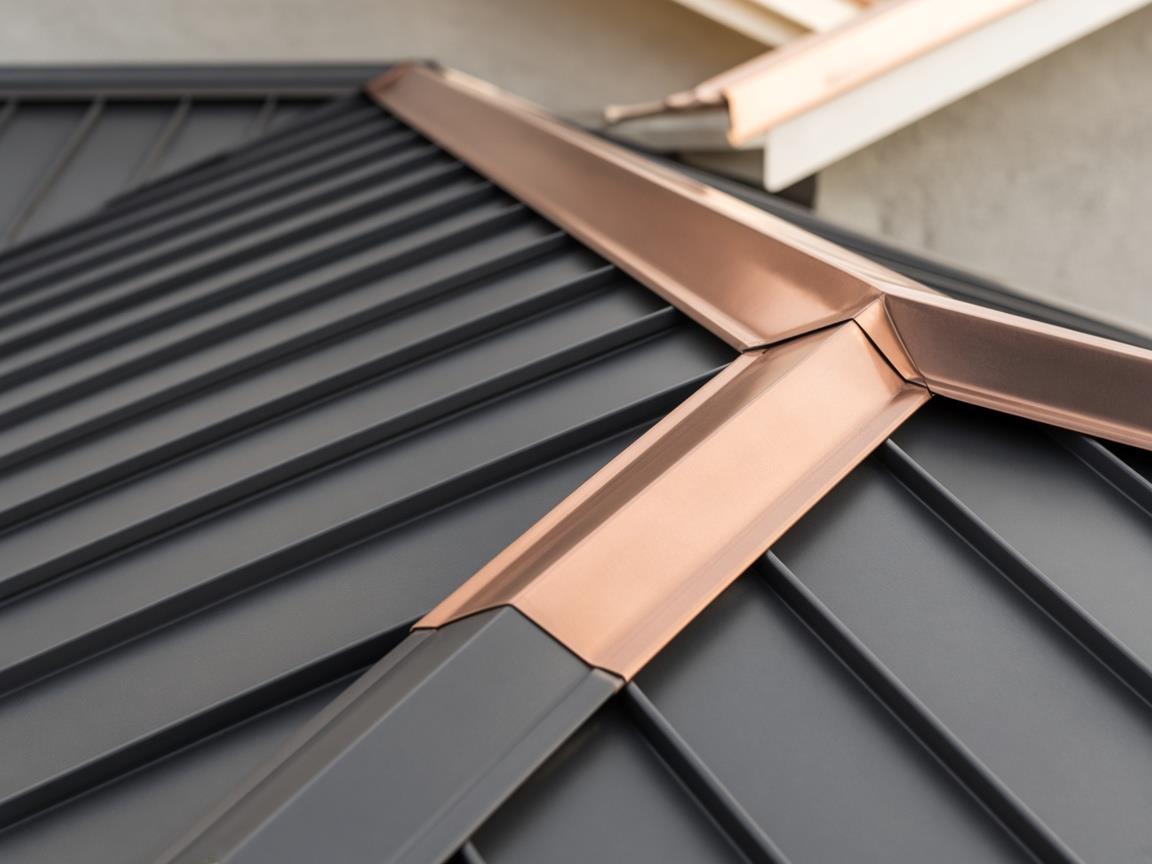
Metal roofing searches mix panels you can buy by the sheet with architectural standing seam that has to be laid out, clipped or fastened on a specific module, and closed with manufactured or site-formed trim. Those are not the same bid. Corrugated metal roofing and exposed-fastener panels belong on agricultural buildings, some houses, and simple slopes when the owner accepts exposed washers that will need attention later. Standing seam metal roofing hides the fasteners or uses a clip, and it asks for straighter deck and more precise trim. Metal shingles try to give a segmented look with metal’s shed characteristics. Commercial metal roofing may be any of these over a business, and it is coordinated with the commercial plan.
This page owns metal roofing, metal roof installation, metal roof repair, and metal roof replacement. A general shingle repair does not live here. If you are comparing a metal reroof with asphalt, read shingle roofing and price both on a tear-off with new flashings, not on a material-only swap.
When metal is a fit
Metal fits steep slopes that can carry the profile, and some low slopes when the panel and the seam are rated for that pitch. It is a poor fit when the owner wants metal’s look on a pitch the seam cannot shed, or when the deck is too uneven for a standing seam to lie without oil-canning becoming the whole conversation. Oil-canning is a visual wave in flat pan areas. Some of it is the nature of thin metal. Excessive oil-canning is a substrate or a handling problem. We talk about it before installation, not after the panels are on.
Installation and repair
Metal roof installation starts with a sound deck, underlayment that matches the panel warranty conditions you actually have, and eave and wall metals in the right order. Penetrations use boots and curbs meant for metal, not a shingle boot forced over a rib. Expansion is real. Long panels move. Fastening them as if they were plywood is how screws shear and seams open.
Metal roof repair is often fasteners, end laps, ridge caps, and penetrations. A dried washer is maintenance until the hole around the screw has enlarged. A dent from hail may be cosmetic or it may have opened a seam. We separate those on the hail page rather than selling a full metal roof replacement for surface marks. When the panels are at the end of their life, or the wrong panel was used for the pitch, metal roof replacement is a tear-off to the deck, not a second skin over failed screws.
Noise, heat, and other claims
Rain on metal is louder on an open porch than in a house with a deck, underlayment, and insulation. We will not promise a silent roof or a specific energy result. Ventilation and insulation do that work. The metal sheds water. If a quote leans on a miracle coating or a universal “50-year” line without naming the gauge, the seam, and the flashings, compare it to a scope that does.
What changes the metal proposal
- Profile
- Exposed fastener, standing seam, and metal shingles are different labor.
- Trim complexity
- Hips, valleys, and walls take more time than the field panels.
- Deck
- Standing seam wants a fair surface. Wavy deck shows through.
- Access
- Panel length and site room decide whether panels are formed on site or delivered.
House projects are tied to residential roofing. The assembly sequence is on roof installation. Service is in Denver, Colorado and surrounding areas. After the roof is on, washers and debris in valleys are a maintenance item, not a reason to ignore the roof for a decade.
Trim, oil-canning, and the first year
Owners judge metal from the street, then live with the trim. Eave, rake, sidewall, and penetration metals are where leaks start if the panel layout was hurried. A ridge that looks continuous from the curb can still be open at the hip transition. We photograph those turns in the project notes because a wide shot of the pans hides them. If oil-canning bothers you, say so before the order. Panel width, gauge, striations, and a fair deck reduce it. They do not erase it on a long flat pan in changing temperature. A contract that promises a mirror-flat pan is selling a picture, not a metal roof.
The first year is when fastener washers on an exposed-fastener roof take heat, and when a clip system shows whether the panels can move. A maintenance look after the first summer is not an admission that the install failed. It is how a metal roof is kept. Bring any leftover trim and touch-up paint the install left, and do not let another trade screw a sign through the pan without a detail. That screw is a new penetration, and it belongs in the same conversation as the original installation.
Metal roofing questions
Can you install metal over asphalt shingles?
We do not use that as a default. The deck condition stays hidden, and the new roof inherits the old one’s shape. Tear-off is the clean installation.
Do you repair metal roofs installed by someone else?
Yes, when the profile can be matched or the failed detail can be rebuilt. Bring any paperwork that names the panel.
What is the difference between corrugated and standing seam?
Corrugated and similar exposed-fastener panels use screws through the panel. Standing seam closes the weather joint at a rib and moves the fasteners off the water path or onto clips. They should not be priced as one item.
Will metal stop all future leaks?
No system does. Penetrations, valleys, and trim still have to be detailed. A metal field with a bad chimney flashing leaks like any other roof.
How do I request metal roof installation?
Use contact and name the profile you want priced, or ask us to recommend one after we see the pitch.
Is a metal shingle the same as a steel panel?
No. Metal shingles are smaller modules with their own locks and flashings. They are closer to a steep-slope covering than to a long structural panel.